 By Luobinsen
  Publish date: October 1, 2025
  Read time: 3 minutes
 Updated October 13, 2026. This article has been revised to reflect current product information and clarify technical claims.
As we continue to work in electric mobility, we at Luobinsen believe that understanding an EV power charging station helps businesses plan their infrastructure. A charging installation combines hardware, communication and protection functions. This article focuses on a DC charging station and explains how those elements relate to its operation.
Main Components of an EV Power Charging Station
A DC charging station has several key components. Its power-conversion modules convert incoming AC electricity into DC for the vehicle. The control system communicates with the vehicle to manage charging within the applicable limits. Cooling, protection devices and charging connectors are also part of the installation. In AC charging, by contrast, conversion to DC normally takes place in the vehicle’s onboard charger.
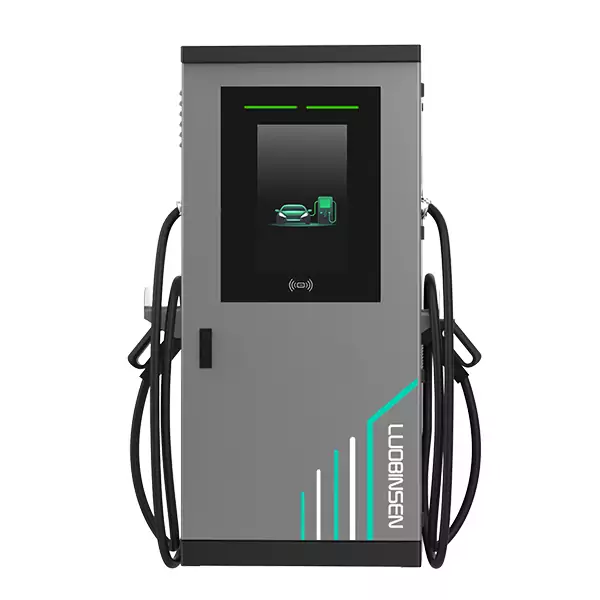
Luobinsen’s current All-In-One DC Charger specification lists a DC 200–1000V output range and connector options including GBT, CCS1, CCS2, CHAdeMO and NACS. The connector and power configuration must match the vehicles and project requirements. For a 120kW installation, confirm the applicable configuration with Luobinsen.
Software and Network Integration
A modern EV charging solution extends beyond the physical hardware. Luobinsen’s MoMo Smart Charging Management Platform lists real-time station monitoring, user and order management, fault management, and charging-data analysis and reporting. These functions give operators information about station operation.
The MoMo page lists OCPP 1.6J/OCPP 2.0.1 support. Confirm compatibility between the chosen chargers, platform and project settings; protocol support alone does not guarantee interoperability with every device or network.
The Role of Safety and Efficiency
Protection functions are another part of station design. The current All-In-One DC Charger specification lists leakage, insulation, short-circuit, voltage, current and surge protection, plus emergency stop. Check the requirements for the selected product and installation rather than assuming that every Luobinsen system has the same protection set.
Power conversion, cooling and system operation should be assessed together when planning energy use and maintenance. Actual efficiency and operating costs depend on the selected equipment and its operating conditions.
Conclusion: Building a Smarter Future in Electric Mobility
Understanding the structure and function of a DC charging station helps businesses evaluate their investment in electric mobility. Hardware selection, platform integration and protection requirements each contribute to a practical station design.
Review the current All-In-One DC Charger and MoMo platform information, then discuss the vehicles, charging capacity and operating requirements with Luobinsen. Confirm the final hardware and software configuration before deployment.
All-In-One DC Charger · MoMo Smart Charging Management Platform